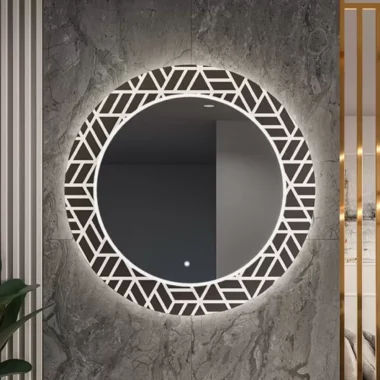
Understanding How LED Mirrors Use Power
LED mirrors combine reflective glass with built-in LED light strips. Unlike traditional incandescent bulbs, LEDs:
Convert more electricity into light (not heat)
Require lower wattage
Have longer lifespans
Maintain consistent brightness
The LED technology itself is inherently energy-saving.
How Much Electricity Does an LED Mirror Use?
On average:
Most LED mirrors use 20–60 watts depending on size and brightness
Traditional vanity lighting setups may use 100–300 watts or more
If you use your mirror for about 2–4 hours daily, the electricity consumption remains relatively low compared to other bathroom appliances like hair dryers or space heaters.
LED Mirrors vs Traditional Lighting
| Feature | LED Mirror | Traditional Bulbs |
|---|---|---|
| Energy Efficiency | High | Moderate to Low |
| Heat Output | Low | High |
| Lifespan | 30,000–50,000 hours | 1,000–2,000 hours |
| Maintenance | Minimal | Frequent bulb replacement |
LED mirrors outperform older lighting systems in nearly every efficiency category.
Do Smart Features Increase Energy Use?
Some LED mirrors include:
Anti-fog demisters
Touch controls
Bluetooth speakers
Digital displays
While these features consume additional power, they typically operate intermittently and are designed for low energy consumption.
The anti-fog system, for example, only runs when activated — and uses controlled heating, not continuous high output.
Long-Term Energy Savings
Because LED mirrors:
✔ Use less wattage
✔ Last longer
✔ Require fewer replacements
✔ Produce less heat
They can reduce both energy costs and maintenance expenses over time.
Even small daily savings add up over years of use.
When Could an LED Mirror Use More Energy?
Energy consumption may increase if:
The mirror is left on for extended hours daily
Brightness is always set to maximum
Demister runs continuously
Poor installation causes electrical inefficiencies
However, normal household use rarely results in high energy draw.
Environmental Impact
LED technology supports sustainability by:
Reducing carbon footprint
Minimizing waste from bulb replacements
Lowering overall household energy consumption
For eco-conscious homeowners, LED mirrors align with modern green living trends.
Final Verdict: Energy Drain or Energy Saver?
LED mirrors are overwhelmingly energy savers, not energy drains.
Compared to traditional vanity lighting setups, they use significantly less power, last much longer, and require minimal maintenance.
Unless misused or poorly manufactured, an LED mirror is one of the more efficient lighting upgrades you can make in your home.
If you’re looking for a modern, stylish, and energy-conscious upgrade, LED mirrors check all the boxes.