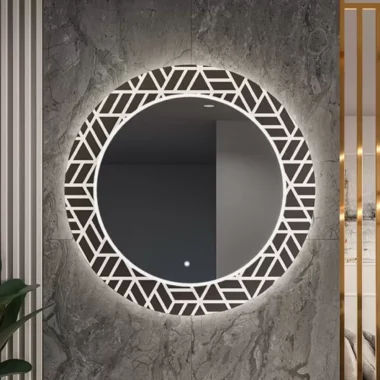
1. High-Quality LED Lifespan (30,000–50,000 Hours)
Not all LEDs are equal.
A durable LED mirror should offer:
✔ 30,000+ hours of lifespan
✔ Stable brightness over time
✔ No color shifting
Cheaper mirrors may dim or flicker prematurely. Always check manufacturer specifications.
2. Strong IP Rating (Moisture Protection)
Bathrooms expose mirrors to:
Steam
Humidity
Splashing water
Look for:
✔ IP44 (minimum for bathrooms)
✔ Higher IP ratings for added protection
This ensures internal components are sealed and safe.
3. Anti-Fog Heating Pad Quality
Durable mirrors use:
Evenly distributed heating pads
Reliable temperature control
Long-lasting internal wiring
Poor-quality anti-fog systems may stop working within a few years.
If anti-fog is important to you, choose a mirror with a proven heating element design.
4. Aluminum or Rust-Resistant Frame
For framed mirrors:
✔ Choose aluminum or stainless steel
✔ Avoid low-grade painted metal
✔ Ensure corrosion resistance
For frameless models, verify sealed edges to prevent moisture intrusion.
Humidity is the enemy of durability.
5. Copper-Free & Anti-Oxidation Glass
High-quality LED mirrors often feature:
Copper-free glass
Anti-oxidation coating
Silver backing protection
This prevents:
Black edge corrosion
Glass discoloration
Long-term mirror degradation
It’s a hidden but critical durability feature.
6. Reliable Power Driver & Wiring
The LED driver converts electricity to power the lights. A durable mirror includes:
✔ Stable voltage regulation
✔ Overheat protection
✔ Certified electrical components
Low-quality drivers are one of the most common failure points.
7. Solid Mounting Hardware
Check that the mirror includes:
✔ Strong wall brackets
✔ Secure anchors
✔ Reinforced back panel
A durable mirror isn’t just about electronics — it must remain stable on the wall.
8. Touch Sensor Durability
If the mirror includes touch controls:
✔ Ensure moisture-resistant sensor design
✔ Look for smooth responsiveness
✔ Confirm long-term reliability
Cheap touch sensors may become unresponsive over time.
9. Scratch-Resistant Surface
Daily use means exposure to:
Cleaning products
Towels
Water droplets
A durable mirror should have a high-quality protective coating that resists scratching and clouding.
10. Warranty Coverage
A strong warranty reflects manufacturer confidence.
Look for:
✔ At least 1–3 years coverage
✔ Clear replacement policy
✔ Support for LED and electrical components
Durability is often backed by warranty transparency.
Signs of a Low-Quality LED Mirror
✖ Flickering lights
✖ Visible moisture inside glass
✖ Rust around edges
✖ Uneven brightness
✖ Weak mounting hardware
Avoid ultra-cheap models that don’t list specifications.
Is a Durable LED Mirror Worth the Investment?
Absolutely.
A high-quality LED mirror offers:
Long-term performance
Energy efficiency
Fewer repairs
Better lighting consistency
Increased property value
Spending slightly more upfront often saves money long-term.
FAQs
How long should a good LED mirror last?
Typically 30,000–50,000 hours depending on usage and quality.
Does IP rating really matter?
Yes. Bathrooms require moisture protection for safe operation.
Are frameless mirrors less durable?
Not necessarily — durability depends on glass quality and sealing.
What’s the most important durability factor?
Moisture resistance and LED driver quality.
Final Thoughts
A durable LED mirror isn’t defined by appearance — it’s defined by construction quality.
Focus on IP rating, LED lifespan, anti-fog reliability, and material integrity. When you choose wisely, your mirror will perform beautifully for years.
Durability isn’t just a feature — it’s peace of mind.