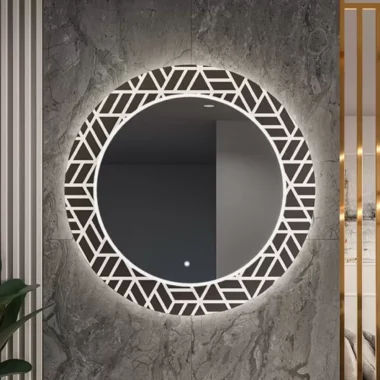
The Rise of Minimalist, Light-Forward Design
Modern interiors are moving toward:
Clean lines
Frameless features
Neutral palettes
Open, airy layouts
Subtle yet functional lighting
Instead of bulky fixtures and decorative excess, today’s design prioritizes simplicity and intentional lighting.
LED mirrors fit perfectly into this aesthetic because they combine function and form in one sleek element.
Integrated Lighting Is Replacing Traditional Fixtures
One of the biggest design trends driving LED mirror popularity is integrated lighting.
Rather than:
Wall sconces flanking a mirror
Overhead vanity bars
Exposed bulb setups
Designers now prefer built-in LED illumination that creates:
✔ Even, shadow-free light
✔ A soft halo glow
✔ A seamless wall appearance
✔ Reduced visual clutter
This creates a more refined, spa-like atmosphere.
The Boutique & Hotel-Inspired Aesthetic
Another major influence is hospitality design.
High-end hotels and spas frequently feature:
Backlit mirrors
Floating vanities
Ambient LED lighting
Frameless glass elements
Homeowners are increasingly replicating that luxury hotel experience at home — and LED mirrors are central to achieving that look.
The Shift Toward Statement Pieces
Modern design embraces fewer but bolder focal points.
An LED mirror acts as:
A functional light source
A reflective surface
A decorative statement
An architectural feature
Rather than blending into the background, the mirror becomes a highlight of the space.
Small Space Optimization
As urban living spaces become smaller, design solutions must do more with less.
LED mirrors support this by:
Eliminating the need for separate light fixtures
Expanding visual space through reflection
Adding depth via backlighting
Enhancing brightness without additional wiring clutter
This multi-functionality makes them ideal for apartments and compact homes.
Smart Home Integration
Technology-driven design is also influencing mirror upgrades.
Many LED mirrors now include:
Touch controls
Anti-fog features
Adjustable color temperature
Smart home compatibility
The fusion of design and technology aligns with modern lifestyle expectations.
Energy-Efficient Living
Sustainability is another factor driving adoption.
LED technology offers:
Lower energy consumption
Long lifespan
Reduced heat output
Fewer bulb replacements
As eco-conscious living becomes more mainstream, energy-efficient design features gain popularity.
Why This Trend Isn’t Going Anywhere
LED mirrors align with long-term design directions:
✔ Minimalism
✔ Smart integration
✔ Ambient lighting
✔ Energy efficiency
✔ Luxury simplicity
Because they support multiple enduring trends rather than a single fad, their popularity is likely to continue.
Final Thoughts
The design trend driving LED mirror popularity is rooted in simplicity, integrated lighting, and modern luxury. As homeowners prioritize clean aesthetics, energy efficiency, and multifunctional design, LED mirrors naturally rise to the top.
They aren’t just trending — they reflect the broader evolution of contemporary interior design.