1. Choose the Right Color Temperature
Color temperature affects how your skin tone and foundation appear.
3000K (Warm White)
Soft, golden glow
Great for evening glam
Can hide blending mistakes
4000K (Neutral White) – The Sweet Spot
Most accurate everyday lighting
True skin tone representation
Ideal for foundation matching
5000K (Cool White / Daylight)
Bright and detailed
Reveals texture and imperfections
Best for precision work
For most routines, 4000K neutral lighting provides the best balance.
2. Adjust Brightness for Your Environment
Brightness matters just as much as color.
Too dim → Over-application
Too bright → Washed-out appearance
Balanced lighting → Natural results
If your mirror has dimmable settings, start bright for detail work, then lower slightly to check final blending.
3. Positioning Is Everything
Your mirror should be:
✔ At eye level
✔ Centered with your face
✔ Free from overhead-only lighting
✔ Not directly facing harsh window glare
Front-facing illumination eliminates under-eye shadows and uneven contouring.
4. Consider Surrounding Light Sources
Layered lighting works best.
Use your LED mirror as the primary light source
Pair with soft ambient overhead lighting
Avoid mixing drastically different color temperatures
Consistency prevents undertone distortion.
5. Test Your Look Before Leaving
If your mirror allows adjustable settings:
Apply makeup in neutral light (4000K)
Switch to warm (3000K) to simulate evening lighting
Switch to cool (5000K) to mimic daylight
This ensures your makeup looks balanced in any setting.
6. Choose the Right Mirror Style
Hollywood Bulb Mirrors
Bold, studio-style lighting
Great for content creators
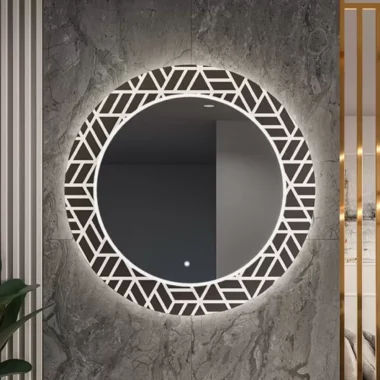
Backlit LED Mirrors
Soft halo glow
Minimalist aesthetic
Tabletop Vanity Mirrors
Adjustable angle
Portable flexibility
Your lifestyle determines your best fit.
Common Mistakes to Avoid
Using only overhead lighting
Applying makeup in yellow-toned rooms
Ignoring brightness levels
Skipping a final lighting check
Most makeup inconsistencies are lighting-related — not skill-related.
Why LED Mirrors Make a Difference
LED mirrors offer:
Even light distribution
Adjustable color settings
Dimmable brightness
Long-lasting energy efficiency
They provide control — and control improves consistency.
FAQs
What is the best lighting setting for makeup?
Neutral white (4000K) is generally the most accurate for everyday makeup.
Is warm light bad for applying makeup?
It’s flattering but may distort undertones and hide blending mistakes.
Should makeup mirrors be brighter than bathroom lights?
Yes — but they should be balanced and front-facing, not harsh overhead glare.
Are LED mirrors worth it?
For consistent makeup results and improved visibility, absolutely.
Final Thoughts
The perfect makeup look doesn’t start with foundation — it starts with lighting.
By optimizing your mirror’s color temperature, brightness, and placement, you eliminate guesswork and achieve consistent results every time.
If your makeup routine feels inconsistent, your mirror setting might be the real issue.