Step 1: Measure Your Vanity Width
Start with the width of your vanity (not the countertop overhang — just the cabinet base).
General Rule
✔ Your LED mirror should be the same width or 1–2 inches narrower than your vanity.
✔ Never exceed the vanity width (unless you’re intentionally creating a dramatic design statement).
Example:
If your vanity is 36 inches wide, choose a mirror between 32–36 inches wide.
This keeps the design visually balanced.
Step 2: Determine Ideal Mirror Height
Mirror height depends on:
Ceiling height
User height
Lighting needs
Room proportions
Standard Height Range
24–36 inches tall for single-sink vanities
Taller mirrors for high ceilings
For LED mirrors, consider how lighting will reflect on your face — taller mirrors often provide better vertical illumination.
Step 3: Account for Wall Space
Measure:
Distance between backsplash and light fixture
Clearance between ceiling and vanity
Side wall spacing
Spacing Tips
✔ Leave 4–8 inches between countertop and mirror bottom
✔ Leave at least 2 inches of space on each side
Avoid crowding the wall.
Step 4: Consider Ceiling Height
If you have:
Standard 8 ft ceilings: Medium-height mirror works best
Tall ceilings (9–10 ft): Consider a taller mirror to avoid visual imbalance
Vertical proportion matters as much as width.
Step 5: Decide on Shape Before Final Measurements
Shape affects visual space perception.
Rectangular Mirrors
Modern, structured look
Great for wide vanities
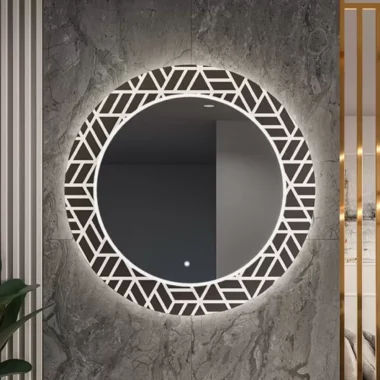
Round Mirrors
Soften tight spaces
Ideal for small bathrooms
Oval or Arched Mirrors
Add elegance
Draw the eye upward
Measure with shape in mind, especially for round designs (diameter matters).
Step 6: Check Electrical Placement (For Hardwired Models)
Before finalizing size:
✔ Confirm wiring location
✔ Ensure junction box aligns with mirror center
✔ Verify mounting bracket spacing
Installation compatibility is crucial.
Step 7: Double-Check Viewing Height
The center of the mirror should sit roughly at:
60–65 inches from the floor (average eye level)
Adjust based on household height differences.
Quick Measurement Formula
Measure vanity width
Subtract 1–4 inches
Confirm vertical clearance
Check wiring alignment
Validate eye-level placement
Simple — but essential.
Common Measuring Mistakes to Avoid
✖ Measuring only the countertop overhang
✖ Ignoring backsplash height
✖ Forgetting light fixture placement
✖ Buying before checking wall studs
✖ Choosing based only on aesthetics
Precision prevents returns.
What If You Have a Double Vanity?
For double sinks, you can:
✔ Install two separate mirrors (one above each sink)
✔ Install one large mirror spanning the entire vanity
Measure sink center-to-center spacing to determine ideal layout.
FAQs
Should my LED mirror be the same width as my vanity?
Ideally slightly narrower (1–2 inches) for balanced design.
How high should I hang my LED mirror?
Typically 60–65 inches from the floor to mirror center.
Can I use an oversized mirror?
Yes — but it should align proportionally with vanity width.
Does mirror size affect lighting performance?
Yes. Larger mirrors provide broader light distribution.
Final Thoughts
Measuring correctly is the difference between a bathroom that feels professionally designed and one that feels slightly “off.”
Before you click “buy,” take five extra minutes to measure carefully. The perfect LED mirror doesn’t just light your face — it completes your space.